

Preventing and Tackling worms in goats
Preventing and tackling worms in goats requires a holistic approach combining pasture management, good nutrition, strategic drenching, and herd monitoring. Unlike sheep and cattle, goats put their evolutionary efforts into developing a browsing strategy of eating, so that they weren’t exposed as heavily to worms in the environment. However, on farms browsing natural bush is not always an option and goats are left to feed in grass paddocks with the subsequent increase in risk of worm issues. The types of worms present on properties can vary depending on rainfall and seasonal conditions. Goat owners should develop an understanding of which worms are common on their property, and the life cycle of those worms to help with control efforts. Key strategies include rotational grazing, utilizing browse plants, implementing faecal egg counts to test for resistance, and ensuring goats have adequate nutrition to build natural immunity
Important Goat Worms
Barber’s Pole worm (Haemonchus contortus): Barber’s Pole worm is one of the most serious worm infestations a goat can have. More information on this worm is below.
Brown stomach worm (Teladorsagia circumcincta): Damages the lining of the abomasum causing scouring/diarrhoea, reduced appetite, weight loss and decreased fibre and milk production.
Black scour worm (Trichostrongylus species): Like small brown worms, black scour worms damage the lining of the gut resulting in nutritional disturbances causing scouring.
Thin-necked intestinal worm (Nematodirus species): Unfortunately, adult goats cannot develop a strong immunity to these worms unlike sheep. They are found in the small intestine where immature worms cause the most damage and scouring.
Some Guidance based on the science
Long pasture (>15 cm) & “top third” grazing: most infective L3 stay very low on plants (larvae remain in lower 5–10 cm); NZ guidance says keeping stock on the top third dramatically cuts worm intake, and recent work shows <10% of larvae are ≥12 cm up the sward. Beef + Lamb New ZealandPMC

BioWorma (Duddingtonia flagrans): controlled studies show meaningful drops in pasture infectivity (e.g., ~50–80% reductions), which compounds your rotational and height strategies; EFSA’s review and tracer trials back this up. PMCBioWorma.
Cattle–goat rotation (cross-grazing): small-ruminant GIN don’t complete their life cycle in cattle, so cows help “vacuum” larvae and reduce pasture challenge for goats. Drovers. Run cattle through goat pastures after goats.
Genetics: Select and breed from goats that have a consistent higher resistance to worms indicated by their regular FEC.
Feed the goats up off the ground: A key way to help prevent worms in goats is to feed off the ground. Goats naturally feed off the ground in the form of browsing anyway but if shrubs and leafy trees aren’t available, then they will graze on the ground and be more susceptible to internal parasites load. Also, if you’re feeding a mineral or a feed, you need to make sure that containers stay clean from poop that could contain a worm load.
Targeted prevention & checks: Fecal Egg Counts (FECs) for trend-monitoring and post-drench efficacy checks are still the practical yardstick in NZ systems. If your goats show any of the following symptoms do a FEC
Diarrhea (scours), or sudden weight loss,
A rough hair coat, lethargy, or a bottle jaw (a fluid-filled swelling under the jaw).
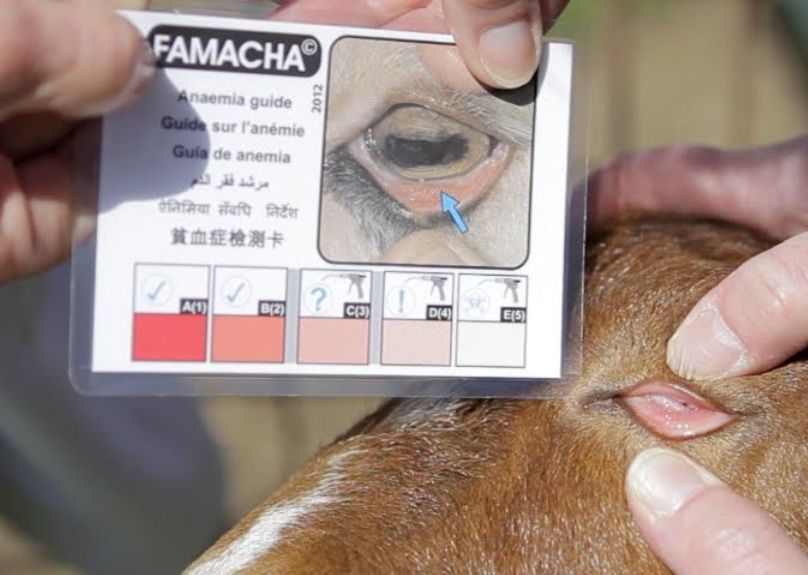
Pale Gums: Goats with parasitic anemia, often from the barber pole worm, may have pale gums and slows down.
Coughing: Goats with lungworms can show signs like coughing and a thick nasal discharge
Optional Refinements you may like to try:
Periodic species ID (larval culture or PCR) to calibrate your ML classifier labels while it’s in development—bridges the “FEC = numbers, not species” gap you called out.
FAMACHA Score card: The FAMACHA score card was developed in South Africa to slow the development of drench resistance in Barber’s Pole worms for sheep and goats. The system uses individual scoring, that allows producers to identify the animals that require treatment, rather than drenching every animal. To use the FAMACHA system, you need to do a worm course and a practical examination. The FAMACHA cards rate the pinkness of the inner eye lid from red to white, with white being fatal.
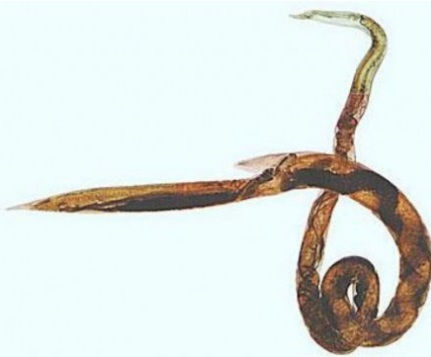
Barbers Pole Worm
Final Thoughts
Record keeping:
Maintain logs for each goat: FEC results, treatments, body condition, notes on resilience.
Use this data to refine selective drenching strategy. Fecal Egg Counts (FECs):
Regular monitoring (e.g., quarterly, or monthly in high-risk seasons).
Post-drench testing (10–14 days later) to confirm efficacy.
FAMACHA scoring (esp. for Haemonchus contortus):
Assess lower eyelid color weekly during risk periods.
Treat only those showing signs of anemia (selective treatment = preserves refugia).
Treatment & Intervention (When Needed)
Targeted selective treatment (TST):
Treat only high-burden or clinically affected goats.
Avoid blanket drenching.
Rotate drench classes (benzimidazoles, levamisole, macrocyclic lactones, etc.) based on efficacy tests.
Always check for resistance → avoid overuse of “last resort” drenches.
Supportive care: hoof trimming, foot bathing (e.g., copper sulfate for foot rot) to reduce compounding stressors.
Nutrition & Immune Support
Daily diverse diet: forage + some grains + root & green vegetables
Supplement with trace minerals & vitamins (as per regional soil deficiencies).
Administer immune support tonics (e.g., dilute MegaMune CuRed or similar herbal/antioxidant mixes).
Focus on consistent body condition → resilient goats tolerate worm exposure better.

Comments